Skip to content
Services05/06 · Awareness & Phishing Simulation

We don't scare people away from their inbox. We teach them to read it. Interactive Arabic workshops, consented phishing simulations, and calm measurement of how behavior changes, without shaming anyone.

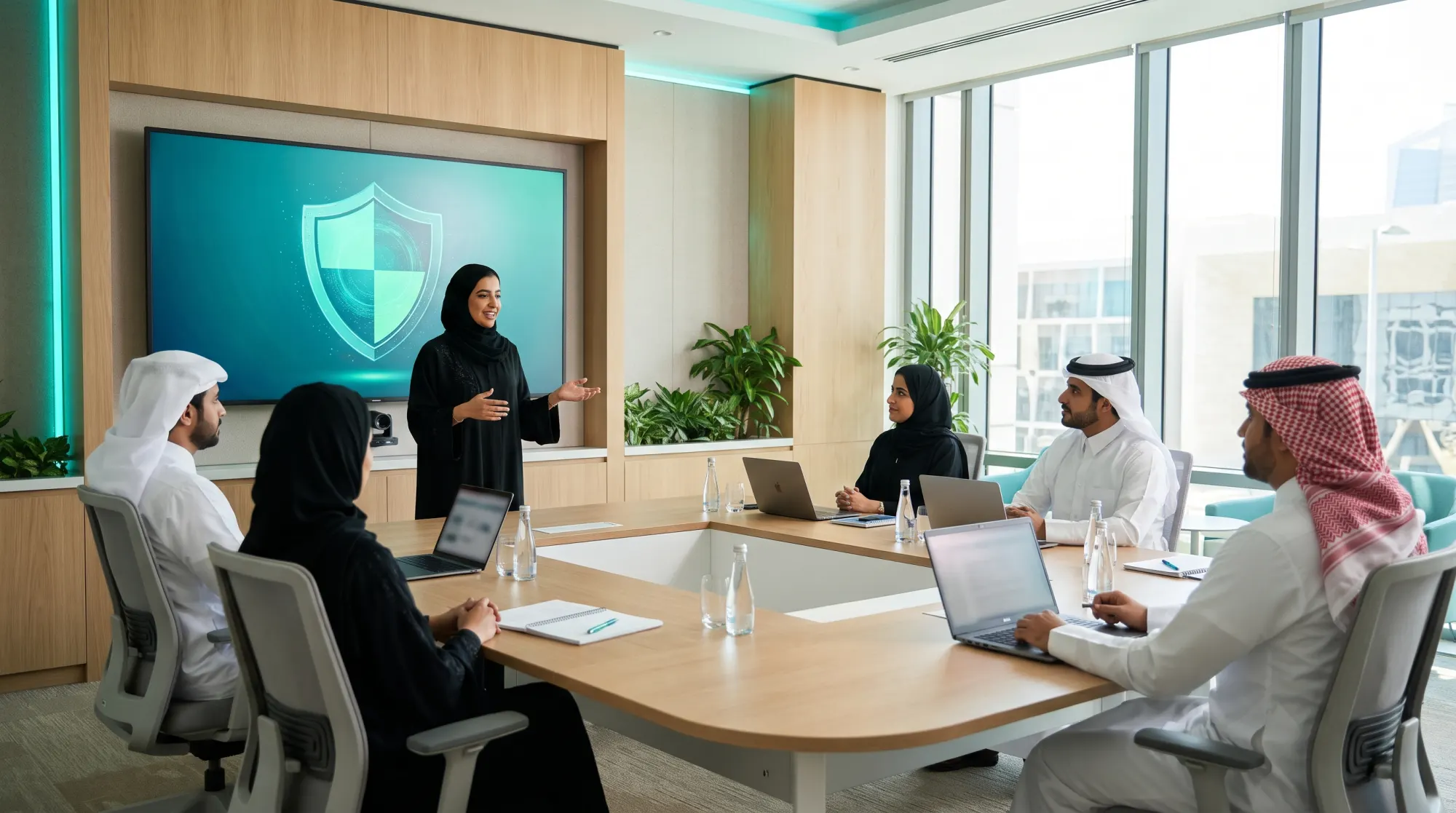
A trainer leading a security awareness workshop for a team around a meeting table

Hello, my name is

Everyone on your team

  • Workshops in Arabic
  • Always consented
  • Zero shaming
A quick game

Can you spot the phish?

This email hides five red flags. Tap anything that looks off. The message is entirely fictional and the domain isn't real.

InboxFictional training email

We detected unusual activity on your account. To avoid suspension and loss of your data, you must verify your identity immediately using the link below and complete the attached form.

Regards, Support Team

Hint: start with the sender.

0/5flags found

Your notes

  1. Not found yet
  2. Not found yet
  3. Not found yet
  4. Not found yet
  5. Not found yet
The psychology of a click

People don't click because they're careless. They click because they're human.

Phishing pushes psychological buttons we all have. Once your team can name those buttons, they become far easier to resist.

  • 01

    Urgency

    "Last chance before end of day"

    Time pressure shortcuts thinking and pushes us to act now.

    The fix:Pause for ten seconds. Nothing real collapses in ten seconds.
  • 02

    Authority

    "A direct request from the CEO"

    We tend to do what people above us ask, without questioning it.

    The fix:Verify through another channel you trust, like a direct call.
  • 03

    Curiosity

    "New bonus table, confidential"

    Anything that feels exclusive or juicy is hard to ignore.

    The fix:If you weren't expecting it, don't open it until you've checked.
  • 04

    Fear

    "A violation was detected on your account"

    The threat of a penalty or loss makes us grab the fastest way out.

    The fix:Report it to security. Reporting is always the right move.
The workshop

Not a lecture. Two and a half hours of doing.

This is a sample program for an in-person workshop in Arabic. We adapt the topics, length and examples to how your team works.

Sample program

Workshop Program

Cyber Awareness & Phishing

Language: ArabicIn person or remote

  1. 01Opening: why attackers target peopleTalk15 min
  2. 02Anatomy of a phishing email, step by stepLive demo25 min
  3. 03The psychology of a clickTalk20 min
  4. 04Hands-on: inspect, decide, reportHands-on30 min
  5. 05Coffee breakBreak15 min
  6. 06Beyond email: texts, calls and messaging appsTalk20 min
  7. 07I clicked. What now?Hands-on15 min
  8. 08Q&A and a quick quizQuiz15 min
Total155 min
Admit your whole team
Behavior change

The goal isn't zero clicks. It's everyone reporting.

We measure a baseline first, then track the direction after workshops and simulations: fewer clicks, and more reports, sooner.

  • Clicked the link

  • Reported it

  • Ignored it silently

"I wasn't sure, so I clicked"

iIllustrative only, not real data. Your actual figures come from your own baseline and follow-up simulations.

Simulations, done kindly

We test behavior. We don't hunt people.

  1. Consent first

    No campaign starts without written approval from leadership and an agreed scope: who's included, when, and what we won't do.

  2. No shaming

    Nobody who clicks is punished or named. They see a short learning page explaining what they missed, at the moment they're most ready to learn.

  3. Anonymized reporting

    Results are shown by department and group, not by person. The point is to see where more training is needed, not who got it wrong.

What we need from you to start

  • Leadership approval for simulated campaigns
  • The groups and departments to include
  • A contact in HR or internal communications
The journey
  1. 01Baseline measurement
  2. 02Workshops
  3. 03Simulations
  4. 04Progress report

Let's make your team the hardest target in the inbox.

Tell us about your team's size and how it works, and we'll suggest a program that fits.

What you keep

  • Phishing campaigns
  • Arabic workshops
  • Behavior metrics